Hidden Himalayan trail above Parbat with panoramic views, authentic homestays, and the silence of a trail untouched by crowds.
Kokhe Danda Trek is a hidden gem in the hills of western Nepal, offering a refreshing alternative to the more crowded trekking routes. See how it compares in our Kokhe Danda vs Poon Hill guide. Tucked away from the mainstream trails, this trek introduces you to untouched landscapes, peaceful forests, and authentic rural life that many popular treks no longer provide. It is an ideal journey for those seeking tranquility, raw natural beauty, and a deeper connection with local culture.
What makes Kokhe Danda truly different is its silence and solitude. Unlike well-known trekking regions that can feel busy during peak seasons, this trail remains calm and uncrowded. You walk through quiet paths, lush forests, and traditional villages where life moves at its own pace. The absence of mass tourism lets you experience nature and culture in their purest form, which is exactly why Kokhe Danda is a better alternative to the Poon Hill trek.
The five-day route is a full loop through Parbat. You start with a homestay night at Haljure, walk through the Magar village of Lespar to a forest camp at Sarga, climb through rhododendron and oak to the Kokhe Danda summit at 3,310 m, and leave by a different path over Phalame Danda. Because the whole loop runs outside the Annapurna Conservation Area, no trekking permit is needed. If five days is too much, there is a 3-day Short Kokhe Danda Trek; if you want more high viewpoints, the 6-day Kokhe Danda Extended Trek approaches the ridge via Muldai and Poon Hill.
Culturally, Kokhe Danda provides a genuine and traditional experience. You will encounter warm hospitality, simple lifestyles, and traditions that have been preserved for generations, especially in the Magar village of Lespar. Staying in local homes, like the authentic homestay at Haljure, adds a personal touch to the journey and gives you insight into the region's heritage and way of life.
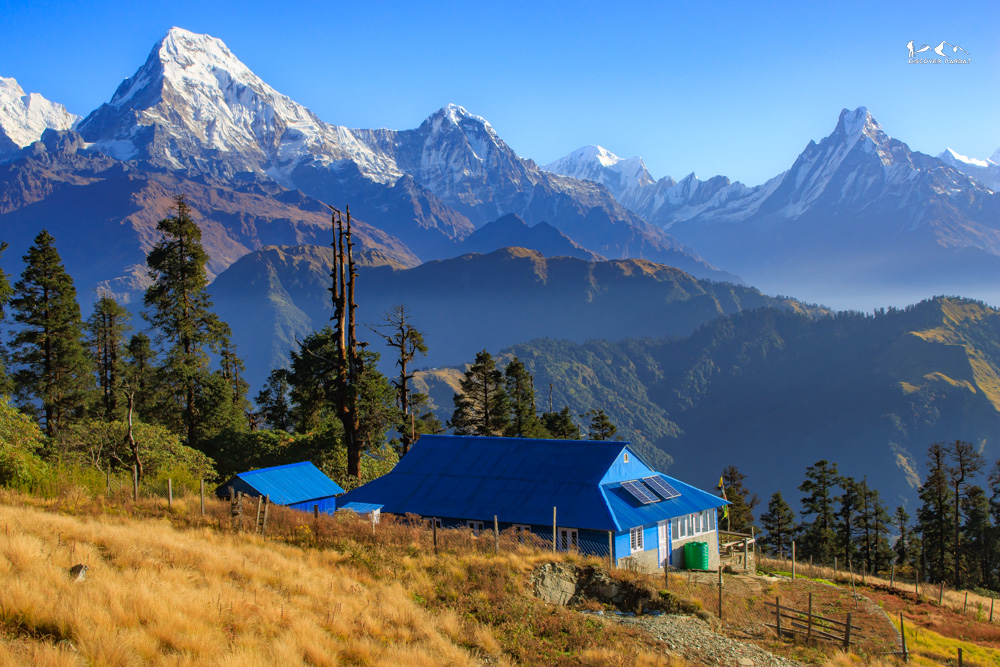
Above all, the highlight of the trek is the panoramic view. From the top of Kokhe Danda you are rewarded with sweeping vistas of rolling hills, distant Himalayan ranges, and dramatic sunrises and sunsets. It is a place where you can pause, breathe, and truly appreciate the beauty of Nepal, far from the crowds yet just as breathtaking. Read more about the Kokhe Danda trail and its story.
Quiet trails matter more to you than famous names
This is your first trek in Nepal, or you're travelling with family
You'd rather sleep in a family home than a lodge built for tourists
You have five days. Only three? See the Short Kokhe Danda Trek
You want to go above 4,000 m or train for a big Himalayan trek
Hot showers and Wi-Fi every night are essential for you
The drive west from Pokhara takes about an hour and a half to Kushma (57 km), where the Kali Gandaki gorge, the bungee jump and the zipline are worth a stop. After lunch it is another hour by road to Banau (2,100 m), the trailhead. The first walk is short: 1 to 1.5 hours uphill to the Haljure homestay, in time for tea on the terrace.
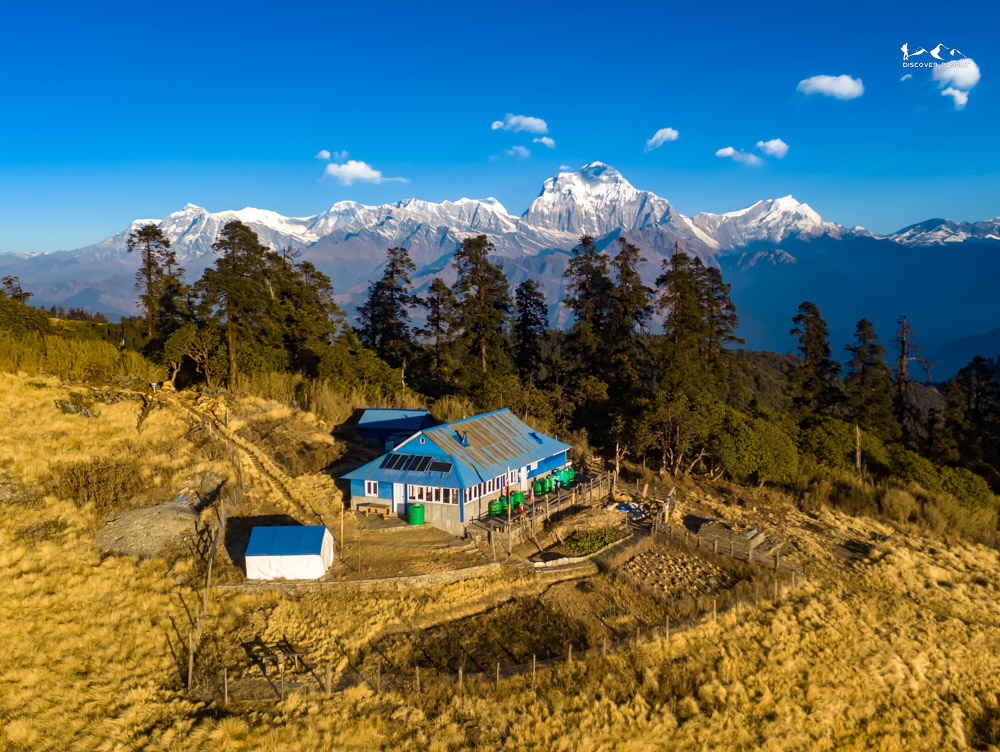
Haljure faces the whole western Himalaya. On a clear morning you can trace the skyline from Dhaulagiri and Annapurna to Manaslu, Ganesh Himal and the Langtang range before breakfast.
The walk to Lespar is the cultural heart of the loop. Your host family teaches you to fold momos, you spend about an hour wandering the village, and you can try on the Magar cultural dress. After lunch the trail leaves the village behind for the forest camp and homestay at Sarga.
This is the big day. From Sarga, a forest clearing with no mountain view, the trail climbs about 700 m in 3 to 3.5 hours through rhododendron and oak. Lunch is at Dhima, and the afternoon is gentler, a steady rise until a last short push past Mohare to the Kokhe Danda summit.
Be outside before dawn: Kokhe Danda gives the closest views of Dhaulagiri and the Annapurna range on the whole loop.
The way down follows a different trail from the way up. You descend to Nangi village for lunch, climb gently for a while, then walk the mostly level ridge to the community homestay at Phalame Danda. At 14 km this is the longest distance of the trek, but most of it is downhill or flat.
Dhaulagiri and a few Annapurna peaks stay in view for the last morning. A tea break at Banskharka village breaks up the descent to Mallaj, where the walking ends and a taxi takes you back to Pokhara via Kushma.
It is graded Easy. The only demanding stretch is Day 3, about 700 m of climbing in the morning and 6 to 7 hours on foot overall. Every other day is 4 hours or less of real effort, apart from Day 4's long but mostly downhill walk. If you would like something shorter, see the 3-day trek.
It starts at Banau, about 2.5 hours' drive from Pokhara including a stop in Kushma, and finishes at Mallaj on the other side of the ridge. Because it is a loop through different villages, you never retrace your steps. Private transport both ways is included.
These are working family homes, not guesthouses. Expect a simple private or semi-private room, a shared bathroom and meals cooked in the family kitchen. Read about the Haljure homestay and Aapa Cottage on Kokhe Danda to get a feel for them.
Whatever the family is eating: usually dal bhat with seasonal vegetables, eggs, local honey and fresh roti. In Lespar you make momos with your hosts. Tell us about allergies or dietary needs before you arrive so the families can prepare.
Mobile signal (NCell or NTC) is available in most villages along the route, though it can be patchy on the higher ridgelines. Wi-Fi is not reliably available at the homestays; this is a remote trail and that is part of its charm. Download offline maps and let family know you may be out of contact for stretches. A local SIM card from Pokhara is a good idea if you need connectivity.
October and November give the sharpest mountain views. March to May is rhododendron season, when the forest between Sarga and Kokhe Danda turns red and pink. December is cold but clear and very quiet. June to September is monsoon. Our month-by-month guide goes into detail.
No. This loop stays outside the Annapurna Conservation Area, so no ACAP permit or TIMS card is needed.
A guide is not required, and you can trek solo. Most people still choose one, because signposting is limited and the homestays are arranged in advance. Here is why we recommend a guide on Kokhe Danda.
Light boots or sturdy walking shoes, a warm layer for the night at 3,310 m, a rain jacket, a daypack, a water bottle, sunscreen, a headlamp and a sleeping bag liner. The full list is in our Kokhe Danda packing guide.
If you need to return early for any reason, there is no refund on the remaining trek cost. However, we will arrange comfortable accommodation for you in Pokhara for the number of nights that remain on your itinerary, at no extra charge. Please also see the full Cancellation Policy for details.